Sand whiting
Sillago ciliata
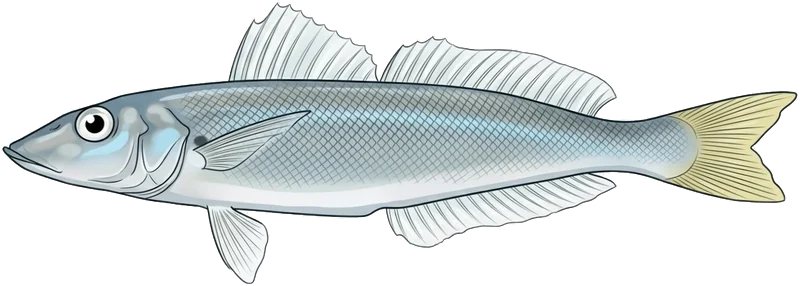
Illustration: Bloom by Day
Slim, pale and almost translucent over clean sand, with a pointed snout it uses to nose into the bottom for worms. They move in small loose groups in very shallow water and drift away from you rather than fleeing.
facts
- habitat
- sand
- size
- ~28 cm, to 47 cm
Bluebird, approximate - not from a cited source
- records near here
- 109 at 6 of 6 spots
A count of occurrence records near these spots, not abundance. Records are where someone looked.
when it has been recorded
JFMAMJJASOND
A gap means no record in the sample, not absence.
the rule
QLD — Min: 23cm · Combined limit: 30 in total of sand, goldenline and northern whiting
source
· verified 2026-10-01
NSW — 27 cm · 20 in total
source
· verified 2026-10-01
Rules change. Check before you dive.
Occurrence data: Atlas of Living Australia (ala.org.au), CC-BY 4.0.
Diver transect counts: Reef Life Survey (reeflifesurvey.com), CC-BY 4.0, supplied via ALA.
Target and protected species: Queensland tidal-water size and possession limits (qld.gov.au) and NSW saltwater bag and size limits plus threatened species lists (dpird.nsw.gov.au).
Habitat and size: Bluebird, approximate, from general knowledge. Not cited. FishBase is CC BY-NC and this app is commercial, so it is not used.
Description written for Bloom. RECORDS ARE WHERE SOMEONE LOOKED, NOT WHERE THE FISH ARE. A record count is a count of records near here and nothing else -- it is not abundance, and a species with few records is not rare. Absence of records is not absence of fish.
Diver transect counts: Reef Life Survey (reeflifesurvey.com), CC-BY 4.0, supplied via ALA.
Target and protected species: Queensland tidal-water size and possession limits (qld.gov.au) and NSW saltwater bag and size limits plus threatened species lists (dpird.nsw.gov.au).
Habitat and size: Bluebird, approximate, from general knowledge. Not cited. FishBase is CC BY-NC and this app is commercial, so it is not used.
Description written for Bloom. RECORDS ARE WHERE SOMEONE LOOKED, NOT WHERE THE FISH ARE. A record count is a count of records near here and nothing else -- it is not abundance, and a species with few records is not rare. Absence of records is not absence of fish.